
 Buy Online



Sun protection for pregnant women – what do you need to know?
Suitable sun protection during pregnancy provides protection against UVA and UVB rays, has an SPF of at least 30 and is well tolerated by the skin. A mineral sunscreen containing zinc oxide or titanium dioxide is a reasonable choice, especially for sensitive skin. Protection is necessary throughout pregnancy, including the first trimester.
During pregnancy, the skin may react differently to familiar cosmetics. A cream you used without problems until recently may start to sting, and after a walk you may notice an uneven complexion and redness. There is no need to replace everything at once. Choose a sunscreen based on its ingredients and your skin's needs, with a texture that feels pleasant for everyday application.
Why is sun protection important during pregnancy?
Sunscreen helps prevent sunburn and limits the darkening of pigmentation spots during pregnancy. It complements daily skincare and reduces the harmful effects of sunlight, which are also associated with premature ageing.
Applying sunscreen regularly is particularly important if you are prone to pigmentation spots. The skin is exposed to sunlight even during short outings – on the way to work, during a walk or while you are outside with your child.
Does the skin become more sensitive to the sun during pregnancy?
Yes, during pregnancy the skin may become more prone to pigmentation spots. Hormonal changes can affect the production of melanin – the pigment that determines skin colour. Some women develop darker areas on the face, and sun exposure can intensify the pigmentation.
These changes during pregnancy are individual. They do not mean that every pregnant woman will necessarily burn more easily or develop a sun allergy.
Hyperpigmentation, pregnancy and melasma
The link between pregnancy and pigmentation spots is partly explained by hormonal changes. Brownish areas on the cheeks, forehead and above the upper lip may be melasma, also called chloasma during pregnancy. However, not all sun-related spots on the face have the same cause. If you notice new or unusual pigmentation, consult a dermatologist.
Daily UV protection during pregnancy helps limit further darkening and the appearance of pigmentation spots. Sunscreen does not erase existing hyperpigmentation, but it is an important part of caring for it.
For melasma during pregnancy, a tinted sunscreen containing iron oxides may provide additional protection against visible light, which can also worsen the spots. This is a feature of certain tinted formulas and does not automatically apply to every mineral cream.
Which sunscreen is safe during pregnancy?
A suitable product combines UVA and UVB protection, a sufficiently high SPF and a formula suited to the skin's needs. The labels “safe during pregnancy” or “pregnancy-safe” are not enough on their own to assess a particular cream.
Check the ingredients and directions for use, especially if you have allergies or use medicated skincare. Tolerance also matters – even ingredients considered safe under normal conditions of use can cause individual irritation.
Mineral sunscreens – physical filters during pregnancy
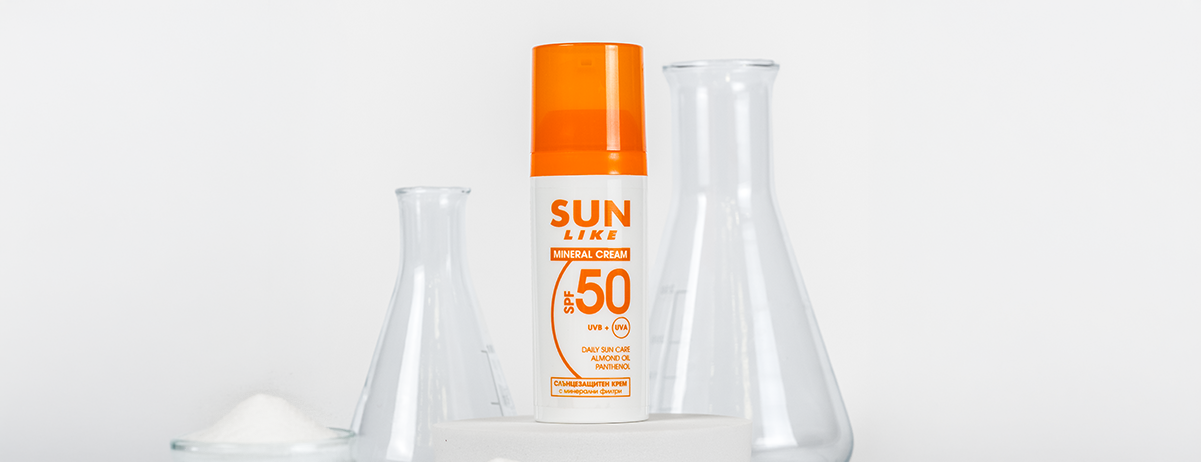
Mineral filters, also called physical filters, are often recommended during pregnancy and for people with sensitive skin. These include zinc oxide and titanium dioxide. They absorb UV rays while also reflecting and scattering some of them. The UV filter used in Sun Like Mineral Face Sunscreen SPF 50 is zinc oxide.
If you choose physical filters during pregnancy, pay attention to the other ingredients as well. The mineral filter is only one component of the finished sunscreen product.
If you are looking for mineral sunscreen during pregnancy, you can explore Sun Like Mineral Face Sunscreen SPF 50. It protects against harmful UVA and UVB rays using the mineral filter zinc oxide. The formula contains panthenol and almond oil, which help soothe and nourish the skin.
The product is dermatologically tested and is described by the brand as suitable for sensitive skin. This does not mean that it has been specifically tested on pregnant women or that individual reactions are impossible. Check the current ingredient list on the packaging and discuss your choice with a dermatologist if you have known allergies or concerns.
Can a pregnant woman use an ordinary sunscreen?
Yes, a cream does not have to be specifically labelled “for pregnant women”. What matters is its composition, UVA and UVB protection and skin tolerance.
Chemical filters, pregnancy and safety – what do we know?
Chemical UV filters protect the skin by absorbing ultraviolet rays. When choosing sun protection during pregnancy, it is important to consider the entire formula, not just the type of filters. Pay attention to UVA and UVB protection, SPF and skin tolerance. If you have questions about specific ingredients, discuss the product with a dermatologist.
If you prefer a mineral formula, Sun Like Face Sunscreen SPF 50 provides UVA and UVB protection with zinc oxide and contains panthenol and almond oil.
What SPF is suitable during pregnancy and for everyday use?
SPF 30 is the recommended minimum for daily use, while SPF 50 is a practical choice for those prone to pigmentation spots. SPF stands for Sun Protection Factor and mainly indicates the level of protection against UVB rays. For UVA protection as well, look for the corresponding marking on the packaging.
Choose sun protection based on your skin type and your activities during the day:
- For dry or sensitive skin, look for a creamy texture without ingredients that irritate your skin.
- For oily skin, choose a light formula or gel that does not leave an unpleasant greasy layer.
- When swimming or sweating, use a water-resistant sunscreen according to its label.
High-SPF sunscreen also needs to be reapplied. The SPF 50 label does not mean all-day protection or that you can stay in the sun without limits.
How should you apply sunscreen to your face and body during pregnancy?
Apply generously and evenly to all exposed areas. Follow the directions on the packaging; a common guideline is to apply it 15–20 minutes before going outside.
For most adults, approximately 30 ml is needed to cover the exposed areas of the face and body when much of the skin is exposed to the sun. The amount required depends on the area you need to protect. This is a general guideline for face and body sunscreen, not an instruction to use that much cream on the face alone.
Apply an even layer to the face, including around the nose and along the hairline, while avoiding the eyes. Do not mix sunscreen with moisturiser or foundation, as this may interfere with the even formation of the protective layer.
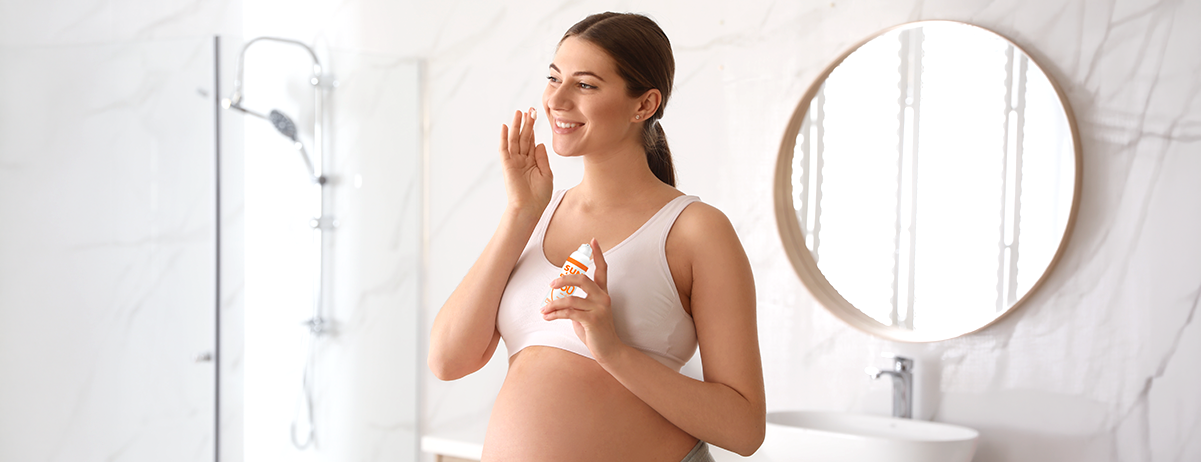
9Do not forget the ears, neck, décolleté and hands. Reapply sunscreen approximately every two hours when outdoors and after contact with water, heavy sweating or towel-drying. The amount used is just as important for protecting against harmful UV rays as the SPF you choose.
Combine sunscreen with shade, clothing and wide-brimmed hats. Avoid prolonged sun exposure during peak hours. Sunscreen reduces the risk of sunburn but does not protect against overheating.
When should you consult a dermatologist about sun protection during pregnancy?
Consult a dermatologist if you experience persistent stinging, redness or a rash after applying a cream. Stop using the product that causes the reaction. A consultation is also needed for new or changing spots and moles.
For daily sensitive-skin care, focus on gentle cleansing, hydration and sunscreen. This short routine is a good foundation for skincare during pregnancy.
When choosing safe cosmetics for expectant mothers, review the entire routine, including serums and products for pigmentation spots. Retinoids, including retinol, and hydroquinone are ingredients to avoid during pregnancy. The word “natural” does not guarantee that cosmetic ingredients are safe or well tolerated.
Show your doctor the ingredient lists of the products you use, especially if they include medicated creams. If you experience hormonal changes and pigmentation spots, do not start skin-lightening treatment on your own. Appropriate care depends on the cause of the pigmentation.
Sun protection is an important part of skincare during pregnancy. Apply a sufficient amount, reapply regularly and seek shade during the strongest sun hours. Explore Sun Like's sunscreen range and choose a suitable formula according to your skin's needs.
Frequently asked questions about sun protection during pregnancy
Do you need sunscreen in November?
Yes, sunscreen is useful in November too, especially if you are prone to melasma. UV rays reach the skin even on cloudy days, and UVA rays can pass through window glass.
Should you avoid SPF because of vitamin D?
No, do not skip sunscreen in order to use sunlight as a source of vitamin D. If you suspect a deficiency, discuss with the doctor overseeing your pregnancy whether testing or supplementation is needed.
Can a pregnant woman use self-tanner?
Self-tanner in the form of a cream or lotion is generally considered suitable during pregnancy. Perform a patch test on a small area and avoid spray treatments because of the risk of inhalation. The resulting tan does not provide sun protection.
Author: Desislava Frangova


