
 Buy Online


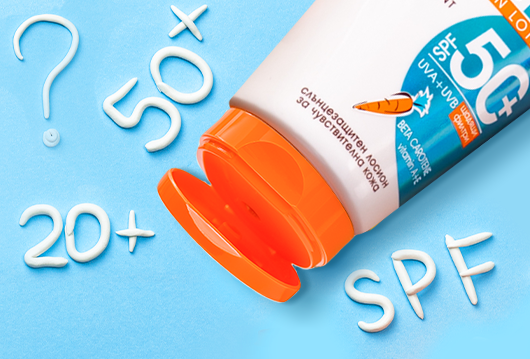

Is Higher SPF Always Better for Your Skin? - Sunlike
If you want to protect your skin from the damage that the Sun can do to it, the best method is to avoid exposure outside when it is at its strongest – that is, between 11 am and 3 pm. But that's not always possible, is it? So if you work outdoors, play sports, walk, have fun, or spend time with family or friends, applying sunscreen is a must. Its use protects the skin from burning, reducing the risk of skin cancer and delaying the signs of aging.
With so many different sunscreen options, how do you choose the one that will protect you from sunburn? The first step is to check the SPF. But how to choose this? In this material, our team will present you with detailed information that will be useful to you in choosing a sunscreen product for daily use.

Sun protection factor and UV rating
We believe that when choosing your new sunscreen, spray or lotion, or whatever formula you prefer, the first thing you look at is the SPF marked on the package. However, this is not the most important thing. When choosing a sunscreen, choose a broad-spectrum one that protects your skin from both UVA and UVB.
1. UVA rays are what cause permanent damage to your skin. These include, for example, wrinkles, and UVA rays are responsible for some types of skin cancer. The UVA rating marked on the packaging shows you the level of protection from these types of rays.
2. UVB rays are the ones that cause skin damage such as burns. The SPF number on the package shows how well the product will protect your skin.
Did you know that the SPF number…
Did you know that every sunscreen has an SPF number that can range from 2 to 50+. This number tells you how long you can be exposed to UVB rays before you burn, of course, if you have applied your sunscreen correctly.
The higher the SPF number, the better protected you will be. A sunscreen product that is SPF 15 will provide you with about 94% protection against UVB. While a product with SPF 30 – 97%, and one with SPF 50+ – 98%.
There are a few other things to consider when choosing a sunscreen for you. UVB rays are much stronger in the middle of the day than in the morning and late afternoon. If your skin is fair, it is much more vulnerable compared to darker skins. This also affects your choice. Remember that no matter how high the factor of the product, if you don't apply it correctly, its effect will not be at its maximum either.
What specialists and dermatologists recommend is the minimum factor to choose is SPF 30 to protect your skin daily.
Does a higher factor protect your skin better?
As mentioned above there are two types of rays UVA and UVB. SPF is the measure of protection against UVB rays. It seems like an SPF 100 sunscreen would give you double the protection of an SPF 50 product. But the truth is, the difference between lower and higher SPF products isn't that big, according to the Skin Cancer Foundation and the US Food and Drug Administration. SPF 30 blocks almost 97% of UVB rays, SPF 50 blocks about 98%, and SPF 100 blocks about 99%.
According to dermatologists, the high factor lotions available on the market - SPF 30 and SPF 50 are perfect for use and offer the best level of protection from UVA and UVB rays. When choosing a product, we advise you to focus on a broad-spectrum one that is in the form of a two-phase lotion. In this way, you will provide your skin with the necessary protection, but also hydration.

What sunscreen should we choose for daily use?
You've probably been in the situation where you wonder what the right choice for sunscreen is. When choosing a product, look for broad-spectrum to protect you from UVA and UVB rays.
It's important to apply enough sunscreen to every exposed part of your body every day. On days when you'll be outdoors for an extended period of time, our team advises you to apply a full-body base coat of SPF 30 half an hour before you leave the house and reapply every two hours thereafter. If swimming, reapply every time you get out of the water.
For daily use, choose a sunscreen with an SPF of at least 30. If you spend time outdoors, choose a product with an SPF of 50. In reality, most people don't apply sunscreen as often as they should, and this higher SPF helps compensate insufficient application.
Your choice of sunscreen depends entirely on your preferences, as with anything else. In this case, you can choose between lotions, sprays, sticks, and various formulas. In fact, the best sunscreen is the one you use, dermatologists say.
The perfect sun protection routine
Sunscreens are the best, easiest and safest product to protect your skin from the sun's harmful rays, which means incorporating them into your daily routine is a must. A perfect routine will prevent your skin from sunburns, premature skin aging, as well as cancers. Our team presents you with a good routine to turn into a daily ritual:
1. The first thing to do, of course, is to clean your skin well. Many people do not use a cleansing product in the morning, thinking that cleansing in the evening is enough.
2. Cleansing the skin makes it softer, healthier and fresher. After cleansing the skin thoroughly, use a toner for additional hydration before applying a moisturizer.
3. The serum is the next step in the routine. Vitamin C serums are preferred for daily use as they brighten the skin and are a great antioxidant.
4. The next step is hydration, which supports the healthy appearance of the skin.
5. The last and final step is the application of a sun protection product. It should be applied before makeup and after skin care. Our team advises you not to mix the use of sunscreen with factor BB and CC creams.
Have a long day ahead of you? Create a flawless base for your makeup that will protect you from UVA and UVB rays at the same time. You've heard it a million times, but let's remind you one more time - always use a sunscreen product, remembering to apply it carefully on exposed parts of your body to keep your skin looking healthy and young!
Author: Desislava Frangova


