
 Buy Online



Which areas are missed when applying sunscreen
The ears, eyelids, lips, scalp, neck, and the backs of the hands and tops of the feet are among the areas we easily forget when applying sunscreen. We apply it to our face and shoulders, put the cream away, and head out. Yet the small areas around them remain exposed to the sun – at the beach, on a walk, or on the way to work.
A high SPF cannot protect an area where no product has been applied. A sufficient amount, even coverage, and reapplication are essential.
Why is sun protection important, and should it be used every day?
Apply sunscreen to exposed skin whenever you are going outdoors, including on cloudy days. Clouds do not completely block UV rays, and the need for protection does not end when summer is over.
UVA rays contribute to wrinkles and pigmentation spots, while UVB rays are the main cause of sunburn. Both types can damage the skin. That is why you should look for broad-spectrum UV protection that covers UVA and UVB. Regular use of sunscreen is part of caring for the skin to prevent photoaging and reduce the risk of skin cancer.
What does SPF mean, and how do you choose a sun protection factor for your skin type?
SPF stands for Sun Protection Factor and primarily indicates the level of protection against UVB rays. Also check the label for UVA protection.
For daily use, choose a broad-spectrum product with SPF 30 or higher. For extended time outdoors, SPF 50 is a suitable choice, combined with shade, a hat, and protective clothing. Darker skin also needs sun protection.
Choose a texture you enjoy applying. If your skin tends to become oily, you may prefer a lightweight fluid; if it is dry, a richer cream may be more suitable. For sensitive skin, consider your skin's tolerance and the manufacturer's instructions.
Facial sun protection: which areas do we miss?
The cheeks, nose, and forehead usually receive attention. Sun protection for other facial areas often takes a back seat – especially around the eyes, temples, and hairline.
How do you apply sunscreen to your ears and scalp?
For good sun protection for the ears, cover the tops, outer curves, and backs of the ears. Also check the narrow strip of skin along the hairline.
Do not miss an exposed parting or areas where the hair is thinning. For scalp sun protection, apply a suitable product to exposed skin. A wide-brimmed hat is a convenient option when applying sunscreen between the hairs is difficult, and it provides additional protection.
How do you apply sun protection around the eyes and on the lips?
Concern about stinging often makes us avoid the area around the eyes. When choosing SPF for the eye contour, look for a broad-spectrum product with SPF 30 or higher that is suitable for this area according to the label.
When protecting the eyelids, apply carefully, keeping the product out of the eyes and away from the inner eyelid margin. If the instructions exclude the eye area, choose another suitable formula. Complete your protection with UV-protective sunglasses and a hat.
For lip sun protection, use a lip balm with SPF 30 or higher. Reapply it according to the instructions, including after eating and drinking. An ordinary moisturizing lip balm without a stated SPF is not a substitute.
Where should you apply sunscreen on the body?
Continue from the face to the neck, the back of the neck, and the décolletage. To protect your neck and décolletage, spread the product over all exposed skin rather than stopping at the jawline.
The back is easy to miss because it is difficult to see and reach every part. Ask someone to help you apply the product.
How do you protect your hands, feet, and the areas around clothing?
The backs of the hands are exposed to the sun during many everyday activities. To protect your hands against aging associated with sun damage, apply sunscreen there too. After washing your hands, restore the coverage if you are staying outdoors.
Do not forget sunscreen on the tops of the feet and toes. When wearing sandals, cover the skin around the straps. At the beach, pay attention to the areas next to the straps and edges of your swimwear – movement can expose them.
Areas often missed when applying sunscreen | What to check |
Ears | Tops, outer curves, and backs |
Scalp | Exposed parting and thinning areas |
Around the eyes and eyelids | Suitable product, careful application, and UV-protective sunglasses |
Lips | Lip balm labeled SPF 30 or higher |
Neck, back of the neck, and décolletage | All exposed skin, including the back of the neck |
Back | Help with areas you cannot reach |
Hands and feet | Upper surfaces and fingers or toes |
Around clothing | Skin along swimwear straps, sandal straps, and swimwear edges |
How do you apply sunscreen correctly, and how much do you need?
When discussing how to apply sunscreen correctly, the amount is just as important as the coverage. A guideline for an adult is about 30 ml for exposed areas of the face and body when wearing typical beach clothing. According to Mayo Clinic, the amount needed depends on body size and the area being covered.
For the correct amount of sunscreen, also follow the label. Spread the product evenly on dry skin approximately 15 minutes before going out, as recommended by the American Academy of Dermatology.
Cream, spray, or stick – how do you apply each correctly?
With a spray, one quick spritz is not enough. Apply generously and spread according to the instructions. For the face, first spray the product onto your palms, then apply it with your hands. Avoid inhalation, strong wind, and use near an open flame.
For small areas such as the ears and hairline, you can use a sunscreen stick for precise application. Follow the instructions on the packaging and cover the skin evenly – one light swipe is not enough.
In a morning skincare routine, sunscreen is usually applied after moisturizer and before makeup. A day cream with SPF must also be applied in a sufficient amount and reapplied.

When and how often should sunscreen be reapplied during the day?
When spending time outdoors, reapply approximately every two hours. Reapply after swimming, sweating, or towel-drying as well, following the instructions on the packaging. This also applies to water-resistant products, as the American Academy of Dermatology explains. When reapplying, cover the same areas – face, ears, neck, hands, and feet.
What are the most common mistakes when using sunscreen?
Among the most common mistakes when applying sunscreen are using too little, leaving areas uncovered, and forgetting to reapply. A higher SPF does not make up for these omissions. During extended sun exposure, add shade, a hat, sunglasses, and suitable clothing. Sunscreen is one part of sun protection.
Skincare is about small daily habits
Sun protection does not stop at the face and shoulders. The ears, lips, neck, and other easily overlooked areas also deserve attention. Using a sufficient amount and reapplying regularly turns sunscreen application into a beneficial daily habit – at the beach, in the city, or on a walk.
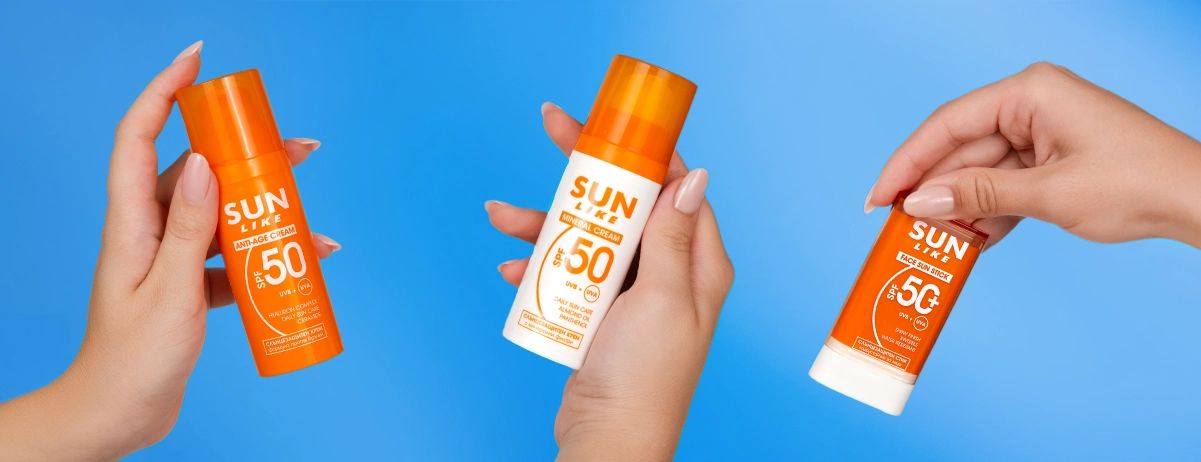
Explore the Sun Like sun protection range and choose a product that suits your skin's needs and your everyday routine. When application is convenient and pleasant, it becomes easier to make time for it. And those few minutes of care deserve a place in every day.
Frequently asked questions about sunscreen products
What is the difference between mineral and chemical sunscreen?
The difference lies in the type of UV filters. Mineral filters include zinc oxide and titanium dioxide. They mainly absorb and partly scatter UV radiation. Organic filters, also called “chemical” filters, absorb UV rays as well. Both types can provide effective protection.
Does sunscreen interfere with vitamin D synthesis?
It may reduce vitamin D production in the skin, but that does not automatically mean a deficiency. Do not skip sun protection for this reason. The AAD recommends obtaining vitamin D through your diet. Consult a doctor if you suspect a deficiency.
How can I protect myself from blue light and urban pollution?
If you are prone to pigmentation spots, tinted sunscreen containing iron oxides can provide additional protection against visible sunlight. This does not mean that ordinary screen use requires the same precautions.
For everyday skincare in an urban environment, include gentle cleansing and hydration. SPF does not measure protection against pollutants.
Can I use sunscreen from last summer?
Yes, if the expiration date and the period after opening allow it, and the product has been stored properly. Do not use it if its color, smell, or texture has changed. Keep the packaging away from direct sunlight and excessive heat.
Author: Desislava Frangova


