
 Buy Online


Why Natural Oils Can't Replace Sunscreen
Choosing sunscreen products becomes a hot topic at the beginning of the summer season. More and more often, fans of natural cosmetics prefer natural oils as a means of sun protection. It sounds good, but can natural oils really protect effectively against the harmful rays of the sun?
Before replacing sunscreen with a jar of olive oil in your beach bag, let us carefully examine this issue, which is extremely important for health.
- First and most importantly, it should be known that some oils should not be used at all in sunny weather, as they can provoke unnecessary pigmentation. For the face and body in summer, only oils that are not prone to oxidation can be used.
- Sun protection. The Sun Protection Factor (SPF) protects against the sun’s rays. The organization that controls the quality of cosmetics in America (FDA) recognizes as sun protection only cosmetics with at least SPF 5.
Now let us return to natural oils. Some vegetable oils do indeed contain natural UV filters, but only at minimal levels – between 1 and 6 – which is far from sufficient to protect against UVA and UVB rays.
Let us look at the most popular natural oils used for sun protection:
Raspberry seed oil
The reputation of raspberry seed oil, which was believed to have the highest natural sun protection – SPF 15–50 – was recently debunked. But this range is too broad, which suggests that it has not been studied precisely enough. Yes, you can add it to your sunscreen product, but do not rely entirely on it. Raspberry seed oil is rich in the most active forms of vitamin E. In its natural form it is quite expensive and is often used in blends rather than on its own.
Coconut oil
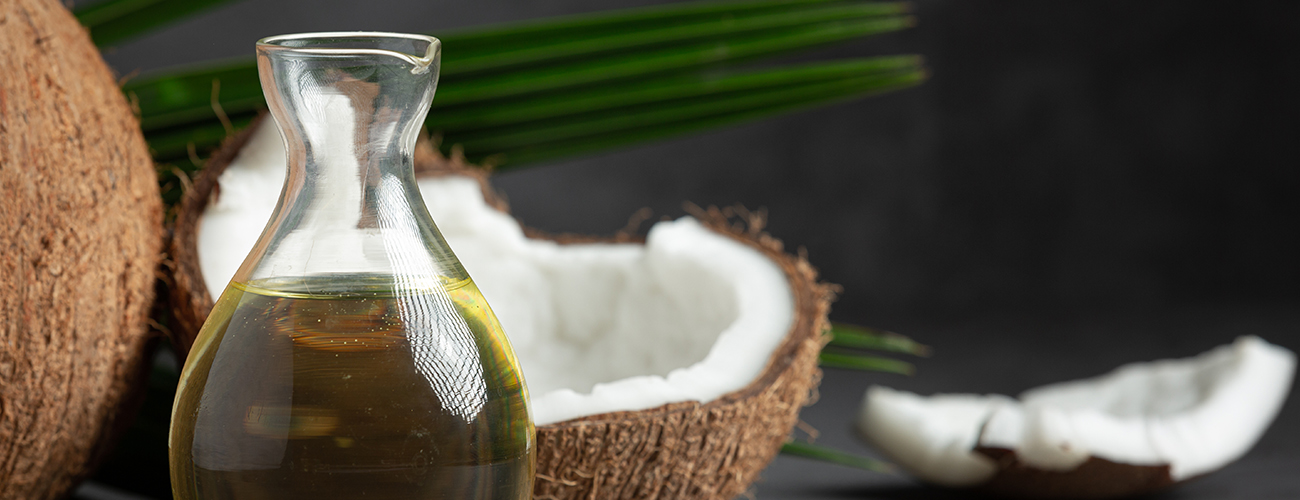
Coconut oil has SPF 6–7 and is excellent as a base component in sunscreen blends, not only for the body but also for the hair. Coconut oil in its pure form is not recommended for the face because its protection is weak and it may also have a comedogenic effect (people with oilier skin should be especially careful). At temperatures above 25 degrees, coconut oil becomes liquid, so be careful when carrying it.
Shea butter
This natural elixir has softening, regenerating and sun-protective properties and SPF 4. It absorbs perfectly, moisturizes and protects.
Jojoba oil
This oil is stable, does not oxidize and can practically be heated and cooled without problems. Jojoba contains a natural sun protection factor of SPF 4 and is a good base for sunscreen blends. It is suitable for almost every skin type and absorbs perfectly. Jojoba is also ideal for hair.
Sesame oil
The high percentage of vitamin E in sesame oil has an antioxidant effect, prevents oxidative processes and restores the protective functions of the epidermis. The oil has a sun-protective effect no higher than SPF 5. It is suitable for the body and hair. When buying oil, determine whether you will use it for cosmetic purposes or for food. In the kitchen it is good to use unrefined oils, but for cosmetics choose refined ones
Cocoa butter
It is a solid product with a yellowish color, which melts in the sun and on contact with the skin and forms a dense layer, giving an irresistible cocoa aroma. The butter has a light natural sun protection factor and the ability to give a rich tan and preserve it for a long time.

Avocado oil
It has ultraviolet-reflecting ability and is resistant to oxidation. In addition, it hydrates and improves skin elasticity. SPF 4 is a good base for sunscreen blends.
Essential oils and the sun
When it comes to essential oils, there are some contradictions. One group of oil fans believes they can provoke unwanted pigmentation under the influence of sunlight, while another fully trusts them during summer. But given that they are applied to the face and body, there is no room for experiments. Lavender, carrot, chamomile, mint and St. John’s wort oils are best used in small amounts in after-sun care.
Can we make a homemade sunscreen product?
You will need titanium dioxide or zinc oxide. Combining them with natural oils containing UV filters can create an active sunscreen product. To chemical filters, you can add a mixture of 50 ml jojoba oil, 30 ml coconut oil, 10 ml raspberry seed oil and 10 ml avocado oil.
“Sun Like” products contain gentle, broad-spectrum UVA+UVB filters. They act immediately after application, reflecting light like a mirror and working on the surface of the skin without penetrating deeply. The new filters provide immediate, safe, secure and very high protection.
“Sun Like” sunscreen formulas are also enriched with:
- Beta Carotene – which not only protects but also nourishes the skin. The provitamin is a source of natural vitamin A and is also a powerful antioxidant that helps achieve a fast, even and long-lasting tan.
- Vitamins A+E – the combination reduces premature skin aging, nourishes and deeply hydrates, and protects against dryness.
- Panthenol – for deep hydration and soothing irritated skin.
- Hyaluronic acid – for a deeply hydrated, fresh and radiant appearance.
Author: Desislava Frangova


