
 Buy Online


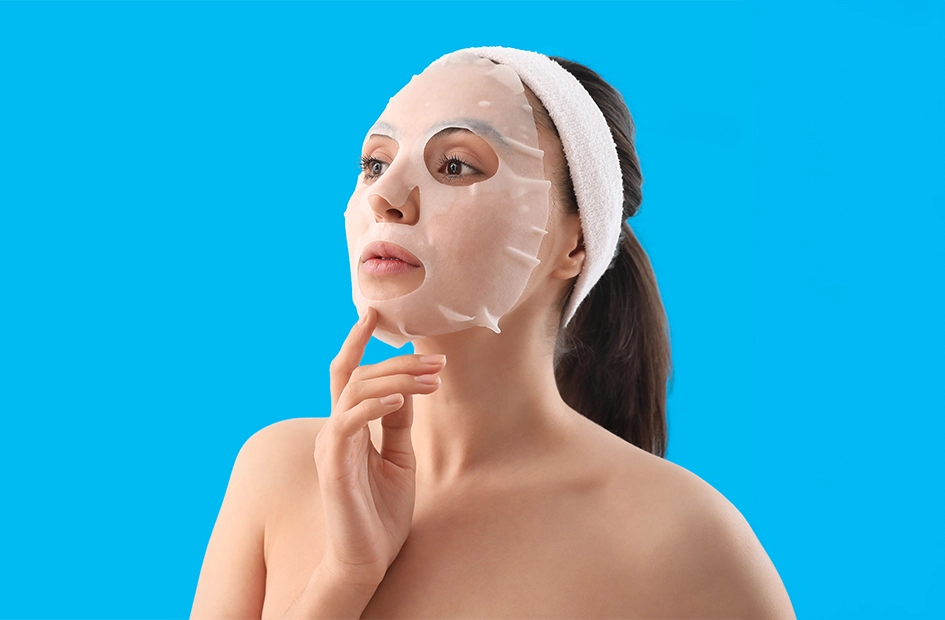

Is the sheet mask safe for acne and sensitive skin?
Sheet masks can be safe and effective even for sensitive skin and skin prone to acne when the formula contains suitable active ingredients and is used correctly. What matters is not the face masks themselves, but the composition of the serum, the method of application and the consideration of the individual skin type.
If you are looking for a soothing face mask after sun exposure, redness or dehydration, a properly selected formula can help restore the comfort and balance of the skin. In this article, we will look at the mechanism of action of face masks, which ingredients are suitable for sensitive skin and how to choose a product according to your skin type.
When is a sheet mask safe?
A face mask is suitable for sensitive or reactive skin when:
it does not contain aggressive or potentially irritating ingredients;
it has hydrating and soothing action;
it supports the skin barrier;
it contains natural ingredients and ingredients with proven action;
it is suitable for your skin type.
For acne, face masks can be very useful in care if the specific formula reduces the risk of clogged pores or irritation.
Be careful with oily products, strong fragrances or ingredients that can affect the sebum balance.
How does the face mask act on the skin?
15 minutes under occlusion can change the result
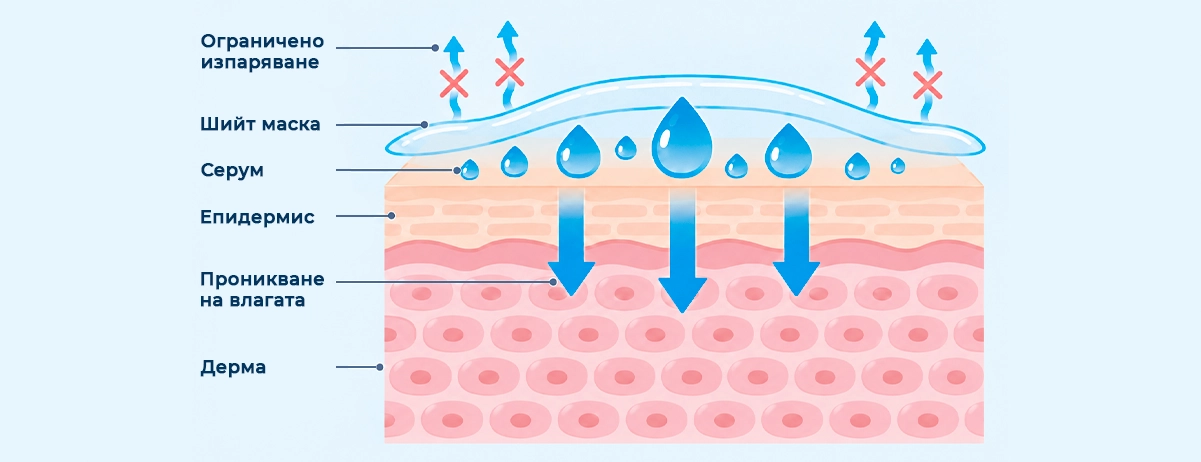
The sheet mask works through a mechanism called occlusion. This means that the fabric of the sheet (most often cotton) creates a temporary environment that limits the evaporation of moisture and allows the serum to stay on the skin for a longer time.
This process supports hydration and allows the active ingredients to act more effectively on the skin of the face.
However, occlusion is not a universal solution. With very oily skin or a tendency to clogged pores, the formula should be chosen carefully, because the combination of heat, sebum and ingredients with high viscosity can increase the risk of comedones.
Fabric, ingredients and time – the three factors for a good result
The effect of the mask depends on three main elements:
The material of the mask – it should adhere well and distribute the serum evenly.
The formula – the active ingredients determine whether the product will hydrate, nourish or soothe.
The application time – it is important to follow the instructions and not leave the mask on for too long.
A good homemade face mask can also be useful when it contains suitable ingredients, but professionally developed formulas have a more precise balance of active components.
Sheet mask for acne – the composition is key
Acne does not mean that you should completely avoid face masks. The important thing is selection according to skin type.
Comedogenicity – which ingredients can clog the pores?
Comedogenicity describes the likelihood that a given ingredient may contribute to clogged pores. If the skin is oily or prone to acne, look for light textures and formulas that do not overload the skin.
Some oils (such as coconut and cocoa) have a high comedogenic index and can be problematic for people prone to acne. In this case, hydrating ingredients such as aloe extract, allantoin and hyaluronic acid are a more appropriate choice.
Sebum, heat and occlusion – why do pimples sometimes appear?
After applying a sheet mask, the skin is covered for a certain time. This can be useful for dry skin, but with an unsuitable product it can create discomfort. If redness, inflammation or new imperfections appear after use, pay attention to the composition.
When should you not use a mask?
Avoid a face mask in cases of:
active irritation;
severe inflammation;
impaired skin barrier;
reaction to a specific ingredient.
For serious skin problems, the best approach is consultation with a dermatologist.
Sheet mask for sensitive skin
Sensitive skin requires a more careful choice. It often reacts with redness, burning or discomfort when exposed to unsuitable ingredients.
Redness and inflammation – what should you avoid?
For dry and sensitive skin, it is good to be careful with ingredients such as:
strong fragrances;
aggressive acids;
alcohol with a drying effect;
aggressive preservatives.
A good nourishing and soothing face mask should support the comfort of the skin, not create an additional feeling of tightness.
pH balance and the importance of acidity
The pH balance is important for the proper functioning of the skin barrier. Products that are aligned with the natural acidity of the skin are usually better tolerated.
Menthol and cooling effect
Menthol has the ability to create a pleasant feeling of freshness, but it is not always suitable for sensitive skin. As with every new cosmetic product, it is important to do an initial tolerance test on a small area.
Soothing face mask – the ingredients that help
A properly selected soothing face mask combines hydrating and restorative components.
Aloe vera (Aloe barbadensis)
Aloe vera is a popular ingredient because of its soothing and deeply hydrating action. Aloe barbadensis extract supports the feeling of comfort in dehydrated skin.
Chamomile extract (Chamomilla recutita)
Chamomile is a common ingredient in cosmetics, including products for the youngest. Chamomilla recutita extract is associated with powerful soothing properties.
Allantoin and betaine
Allantoin supports the feeling of smooth skin, while betaine contributes to maintaining hydration.
Hyaluronic acid and urea
Hyaluronic acid is known for its ability to retain water. Urea supports hydration and comfort in dry skin.
Avocado and banana
Avocado and banana are often used in homemade masks because of their vitamin content and nourishing components. Avocado contains natural fats that can help with dryness.

How to choose according to skin type?
Different skin types have different needs:
dry skin – look for hydration and nourishment;
oily skin – needs light formulas;
sensitive skin – requires minimal risk of irritation;
combination skin – needs balance.
Choosing according to skin type helps improve its appearance and achieve a more even complexion.
How to use the mask correctly?
Before application, use gentle cleansing products to remove impurities from the face.
Then:
Apply the mask on clean skin.
Leave it to act according to the instructions.
Wait for the product to act for 15–20 minutes.
Remove the mask and massage the remaining serum.
It is not necessary to rinse if the product is intended to remain on the skin. Regular use 2–3 times a week is an important part of skin care.
Sheet mask after sun – when the skin has the greatest need for soothing
After sun exposure, the skin is often more sensitive, even when it usually does not cause problems. Heat and UV rays can temporarily affect the protective barrier.
At this moment, a product such as Sun Like’s cooling sheet face mask can support the faster return of the feeling of comfort. Suitable after-sun care contributes to a fresher and more radiant appearance.
Easy homemade face masks with natural ingredients
Many people look for easy recipes for homemade face masks because the ingredients are easily found in the kitchen cupboard or in our refrigerator.
One extremely popular homemade mask includes only 3 ingredients:
avocado;
banana;
honey.
The honey in the recipe softens, while the avocado and banana nourish the skin. To obtain a homogeneous mixture, mash the products well and apply an even layer to the skin. Place a thin cotton sheet with cut-out openings for the face, nose and mouth on top. Leave it to act for about 15 minutes, then remove the sheet and carefully rinse the face with water.
It is important to keep in mind, however, that natural does not always mean suitable for every skin type. Just like with professionally formulated cosmetics, it is important to do a tolerance test the first time.
How to care for the skin after the mask?
After using the mask, preserve the effect with a suitable cream. This helps the skin retain the necessary water and supports its natural recovery mechanisms.
Good care is not based on one product only. It includes regular cleansing, daily face sunscreen and the right selection of active ingredients.
Frequently asked questions
Can a sheet mask be used for acne?
Yes, occlusion itself is not contraindicated. Tolerance depends on the formula of the serum. Avoid products that can clog the pores and choose light hydrating ingredients.
How often are face masks used?
The frequency depends on the skin type and the product. For most formulas, 2–3 times a week is a suitable frequency.
Is the use of a sheet face mask suitable for sensitive skin?
Yes, if it contains soothing ingredients and you have tested the product for tolerance.
Can a mask be used after sunburn?
In case of severe burning, it is better to seek medical advice. For mild discomfort, Sun Like’s soothing cooling formula can help.
Do sheet masks clog the pores?
The sheet of a mask itself cannot be the cause of clogged pores. The ingredients are more important – their comedogenic index and the individual reaction of the skin.
How to find the ideal mask for your skin?
Choose a product according to your skin type.
Look for ingredients that hydrate and soothe.
Check the label for potential irritants.
Use masks as part of a complete routine for beautiful skin.
A properly selected mask can help maintain radiant facial skin, comfort and a healthy appearance. The best result comes when you combine quality products, regular care and get to know the needs of your own skin.
Author: Desislava Frangova


